Shockwave Therapy in Abbotsford - Non-Surgical Relief for Chronic Pain & Injuries
Looking for shockwave therapy in Abbotsford? You deserve treatment that actually helps your body heal, not just something that eases the pain for a day. Shockwave therapy uses focused sound waves to treat stubborn injuries like heel pain, tendonitis, and muscle strain — without surgery, needles, or downtime. Whether you’re dealing with a sports injury, a work-related strain, or pain that just won’t go away, this guide walks you through what shockwave therapy is, what it treats, and how to know if it’s right for you.
Why Shockwave Therapy Matters for Abbotsford Residents
Pain that sticks around for months usually means the tissue has stopped healing on its own. Rest, ice, and stretching help at first, but chronic tendon and muscle injuries often need an extra push to restart the healing process. Shockwave therapy delivers that push — using acoustic sound waves to increase blood flow, break down scar tissue, and trigger your body’s natural repair response.
A good therapist won’t just run the device over the sore spot. Care starts with understanding where your pain is really coming from, how long it’s been there, and what’s causing it to keep coming back.
A good therapist won’t just run the device over the sore spot. Care starts with understanding where your pain is really coming from, how long it’s been there, and what’s causing it to keep coming back.

Conditions Commonly Treated with Shockwave Therapy
Shockwave therapy is commonly used to treat:
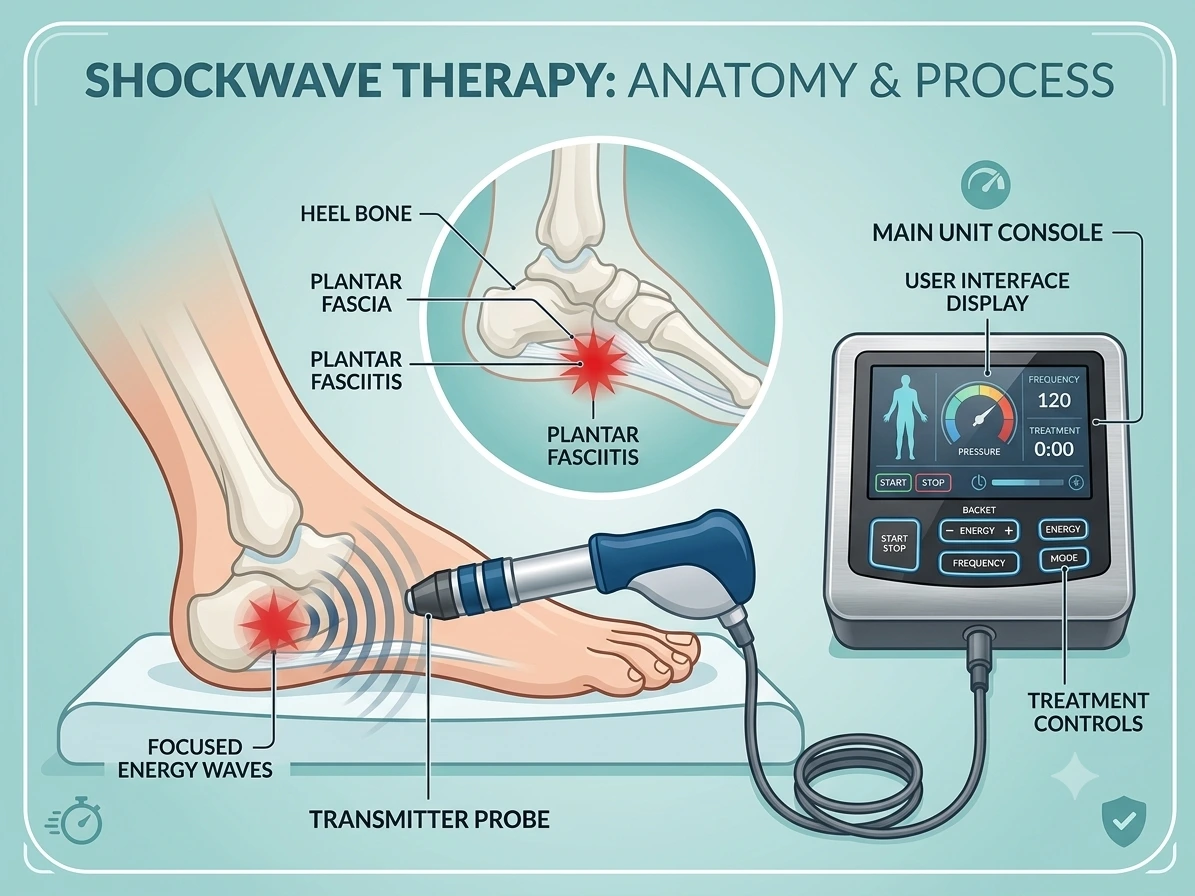
- Plantar fasciitis and chronic heel pain
- Achilles tendonitis
- Tennis elbow and golfer's elbow
- Rotator cuff and shoulder pain
- Patellar tendonitis (jumper's knee)
- Patellar tendonitis (jumper's knee)
- Hip pain and IT band tightness
- Muscle trigger points and tight muscles
- Calcific tendinopathy
If you’re not sure whether shockwave therapy is right for your pain, a proper assessment during your first visit will give you a clear answer – and if it’s not the right fit, your therapist will point you toward the right treatment instead.
What a Shockwave Therapy Session Typically Looks Like
01
Initial Assessment
Your therapist reviews your pain history and examines the affected area to confirm shockwave therapy is the right fit and pinpoint exactly where treatment is needed.
02
Gel Application
A conducting gel is applied to the treatment area, similar to an ultrasound, so the sound waves transfer smoothly into the tissue.
03
Shockwave Delivery
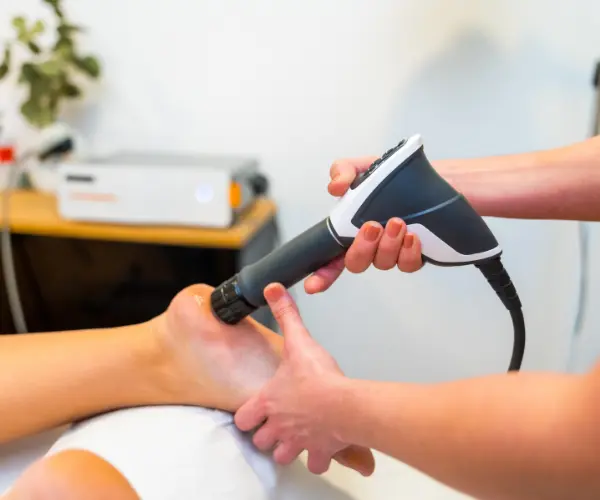
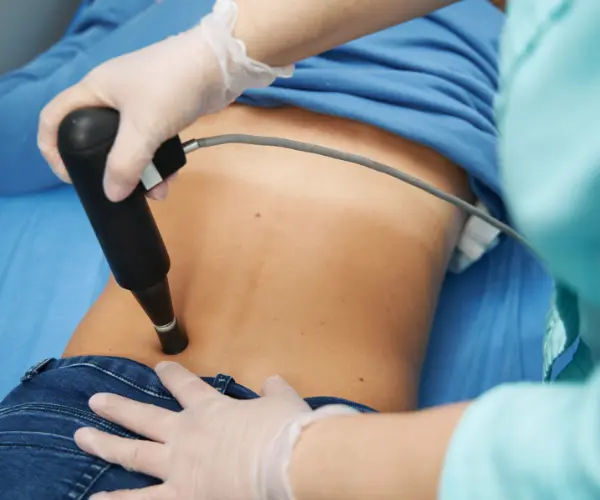
A handheld device delivers focused sound waves to the injured tissue for a few minutes. Most people feel a tapping or pulsing sensation rather than sharp pain.
04
Same-Day Recovery
There's no downtime. You can return to normal activity right after your session, with only mild soreness for a day or two — similar to how muscles feel after a workout.
05
Follow-Up Sessions
Most treatment plans involve 3 to 6 sessions, spaced about a week apart, with progress reviewed at each visit.
What Makes Shockwave Therapy Effective
Shockwave therapy works by sending controlled acoustic energy directly into damaged tissue. This increases circulation, encourages new blood vessel growth, and helps break down calcified or fibrous scar tissue that keeps a tendon or muscle from healing on its own. Many people notice reduced pain and better mobility within a few sessions, with continued improvement over the following weeks as the tissue rebuilds naturally.
Who Can Benefit from Shockwave Therapy
Shockwave therapy isn’t just for athletes. It commonly helps:
- Office workers with tendon strain from repetitive tasks
- Tradespeople managing overuse injuries
- Runners and athletes recovering from tendon injuries
- Anyone with chronic heel, elbow, or shoulder pain
- People who want to avoid or delay surgery

What to Expect at Your First Visit
Your first appointment starts with a conversation, not treatment. Your therapist will ask about how long you’ve had the pain, what makes it worse, and what you’ve already tried. After a physical assessment, you’ll leave with a clear explanation of what’s going on, a realistic treatment timeline, and a plan built around your specific injury — not a generic routine.
FAQ's
How many shockwave therapy sessions will I need?
Most treatment plans involve 3 to 6 sessions, spaced about a week apart. Your therapist will give you a clearer estimate after your first assessment based on how long you’ve had the injury.
Does shockwave therapy hurt?
Most people feel a tapping or pulsing sensation rather than sharp pain. Mild soreness afterward is normal and usually fades within a day or two.
Is shockwave therapy safe?
Yes. It’s a well-studied, non-invasive treatment performed by trained professionals. A short assessment is done first to confirm it’s appropriate for your specific condition.
How soon will I notice results?
Some people feel improvement after just a few sessions, though full results typically build over several weeks as the tissue heals and rebuilds.
Do I need a referral to book shockwave therapy?
No referral is required. You can book directly, and your therapist can coordinate with your doctor if needed.
Will my extended health benefits cover shockwave therapy?
Many extended health plans in British Columbia offer partial coverage. It’s best to check your specific plan, as coverage varies by provider.
Who should avoid shockwave therapy?
People who are pregnant, have blood clotting disorders, or have an active infection near the treatment area should avoid this therapy. Your therapist will screen for this during your first visit.
F
Take the Next Step Toward Feeling Better
Pain that limits how you move, work, or spend time with the people you care about doesn’t have to be permanent. Shockwave therapy in Abbotsford can help your body heal the way it’s meant to – starting with a single assessment.